
Comma Takes a Breath
A racing sentence learns that tiny pauses can make a message easier to follow.
Read together at your own pace. Pausing, rereading, or stopping is always okay.
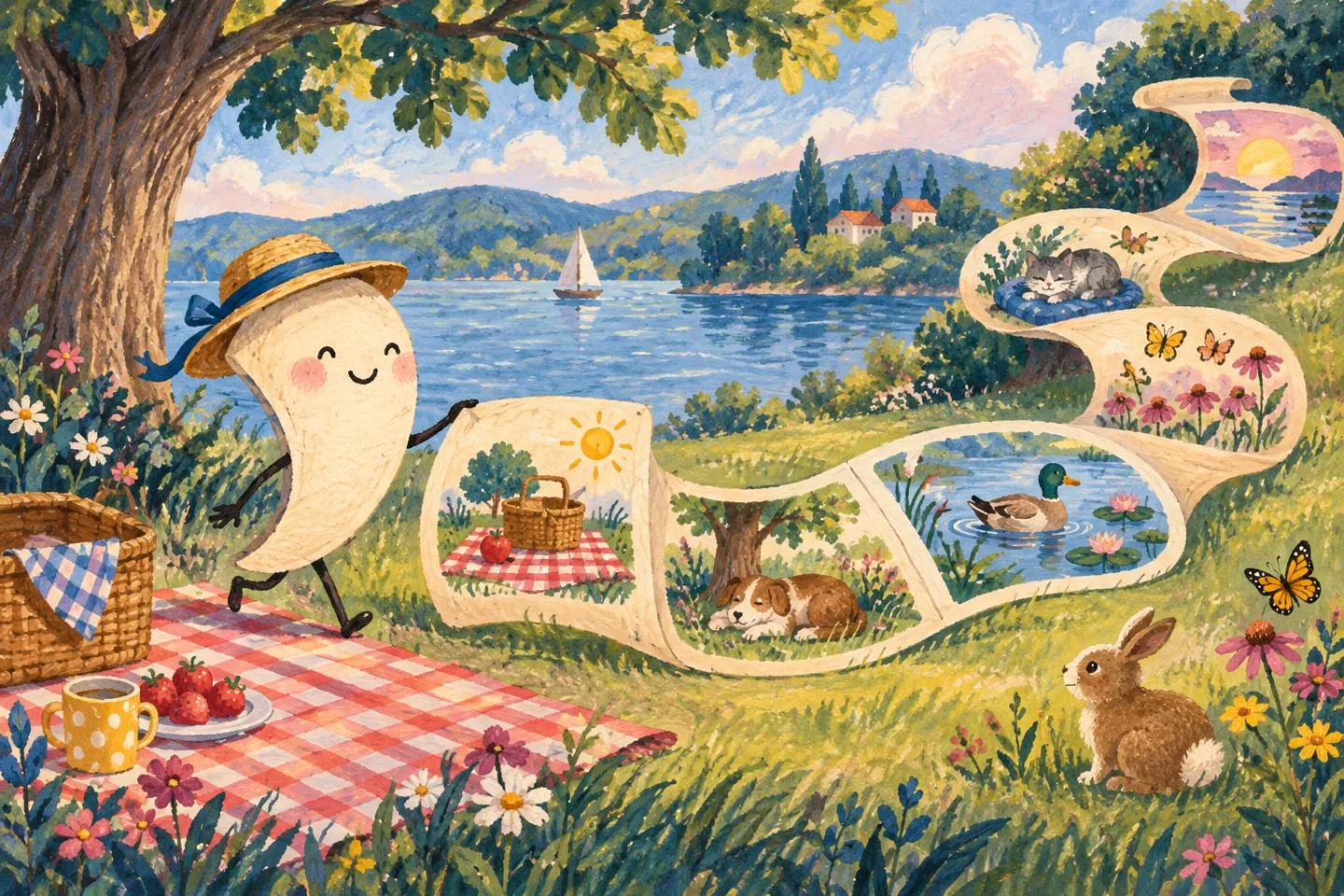
The sentence ran across the page without stopping: We packed apples crackers water blankets and books. By the time Reader reached the end, everything in the picnic basket had blurred together.
Comma stepped onto the line. “I am not a full stop,” Comma said. “I make small resting places.” The list tried again: apples, crackers, water, blankets, and books. Each item now had room to be noticed.
Then Comma moved to a greeting: After lunch, we read beneath the tree. Without the pause, Reader had rushed past the scene. With it, time and action stood in clearer places.
Comma did not sprinkle pauses everywhere. Too many would make the sentence hop like a cart on stones. The workshop learned to use punctuation for meaning, not decoration.
Story workshop
Notice, talk, and play
Words to notice
- punctuation
- marks that organize written language
- list
- a group of named items
- decoration
- something added mainly to change appearance
Talk about the story
- How did commas help the picnic list?
- Why would too many commas be a problem?
- Where does your voice pause in the example sentence?
Try it together
Read one sentence aloud. Mark only the pauses that help its meaning, then compare with standard punctuation alongside an adult.
Activities are designed for shared use. An adult should choose materials and supervision appropriate to the child.
Keep reading
More from this story world
The Shop That Sold Sounds
At an unusual market stall, every object must be purchased with its first sound.
Open this book
Rhyme Time on Line Nine
A delayed train begins moving only when passengers complete its playful rhymes.
Open this book
The Verb That Would Not Sit Still
A lively word escapes from its sentence and changes action everywhere it lands.
Open this book